Low-impact functional training explores how we move smarter. Can a narrow stretched line teach us to move smarter for life? We ask this because the world of exercise is shifting. We now prefer methods that build strength and mobility without punishing our joints.
Slacklining sits at that crossroad. It improves balance, core stability, coordination, and neuromuscular control while keeping joint stress low. Mayo Clinic research supports isometric and gentle work for muscle, core, and joint stability, which makes this approach practical for recovery and long-term health.
In the UAE, climate and community spaces make low-impact methods accessible. We preview systems like Kinstretch, Animal Flow, calisthenics, and mobility work that pair well with slacklining. OutQore, a Dubai-based brand, supports balance and movement culture across the region in an educational, non-sales way.
Key Takeaways
- We are moving toward smarter approaches that protect joints and build lasting strength.
- Slacklining trains balance, core control, and coordination with minimal impact.
- Gentle strength work supports recovery, bone health, and daily function.
- Methods like Kinstretch and calisthenics complement slacklining well.
- The UAE environment and brands like OutQore help make this accessible locally.
The global move toward natural, joint-friendly training
Across the globe we are shifting toward movement methods that protect joints and extend active life. This change answers rising concerns about chronic joint stress, re-injury, and long-term health.
Why we’re shifting now: joint health, longevity, and smarter recovery
We value approaches that raise the heart rate and build strength without heavy wear. Simple cardio options and band or bodyweight work can improve endurance while keeping impact low.
Smarter recovery is now central. Short sessions spread across the week let us progress steadily and reduce burnout. These sessions also support people returning from injury.
From isolation to integration: Kinstretch, Animal Flow, calisthenics, and mobility systems
Systems like Kinstretch, Animal Flow, and calisthenics focus on quality of movements over isolated muscle fatigue. They blend joint-specific mobility, ground patterns, and bodyweight strength to improve coordination and daily function.
“We can still chase strength and cardio gains while preserving joint health and nervous-system readiness.”
- Accessible: Scaled for all abilities indoors or outdoors in the UAE.
- Sustainable: Mix mobility with strength work to stay consistent.
- Practical: Build movement quality so everyday tasks feel easier.
| Approach | Main focus | Why it fits |
|---|---|---|
| Kinstretch | Joint mobility | Respects tissue capacity and adds control |
| Animal Flow | Ground-based patterns | Builds coordination and stability |
| Calisthenics | Bodyweight strength | Scales strength without heavy loading |
Low-impact functional training: what it is and why it works
Low-impact functional training represents a smart approach where This method focuses on smart loading to grow strength and endurance while protecting fragile joints. We define it simply: targeted movement sessions that use bodyweight, bands, and controlled ranges to stimulate muscle and cardio gains without pounding the body.
The science in plain language: strength, cardio, and mobility without pounding the joints
By managing tempo, range, and alignment we create enough stimulus for strength and heart adaptations. Controlled multi-joint moves raise the pulse and demand on muscles while keeping compressive forces low.
That means the lungs and heart work hard when we sequence movements and control rest. Strength training can be effective with lighter loads if we use tempo and volume wisely.
Who benefits most right now: beginners, active agers, and post-injury athletes
Beginners get progress without overwhelm. Active agers preserve mobility and reduce fall risk. People rehabbing an injury can rebuild capacity while lowering re-injury chance.
Core movement patterns to prioritize: squat, hinge, push, pull, carry
These five patterns map directly to daily life—standing, lifting, reaching, and moving loads. We recommend circuits that combine squat, hinge, push, pull, and carry variations to improve coordination, balance, and core control.
Practical note: use resistance bands, isometric holds, and bodyweight exercises to strengthen muscles while keeping stress on joints manageable. Focus on technique and steady progress; low impact does not mean easy.
“We build capacity by loading tissues intelligently — consistency beats spikes in load.”
- Why it helps: better stability and mobility with less joint wear.
- How to apply: prioritize form, keep pain-free ranges, and progress time or reps before load.
Slacklining as functional training with minimal joint stress
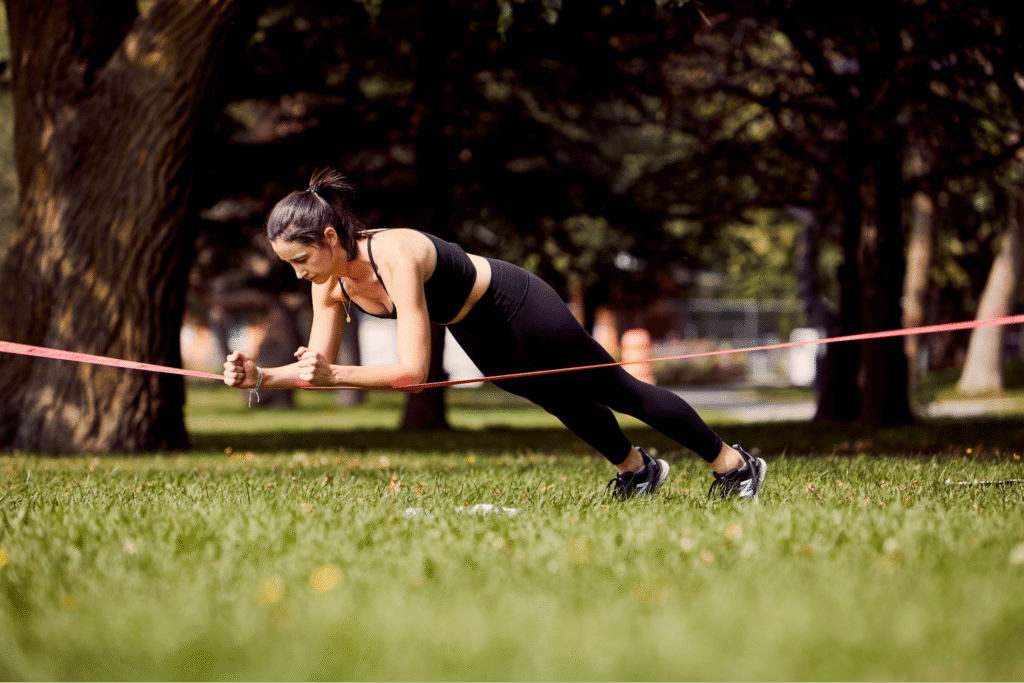
On the slackline we learn to manage small corrections that protect joints and boost coordination. Slacklining trains balance, core stability, and neuromuscular control by forcing constant micro-adjustments.
Key benefits
Balance and coordination: tiny shifts recruit stabilizers and improve movement timing.
Core and strength: sustained time on the line builds core endurance and helps build strength in small muscles.
Mindful control: breath and focus support better range of motion and technique transfer to other exercises.
Why it reduces joint stress
The line’s tension disperses force. Micro-corrections lower compressive loads on the knee, hip, and spine. That makes slacklining a safe, low impact option that complements resistance work and strength training.
Gear, setup, and form cues
- Choose a low line height and a moderate width for your starting position.
- Use secure anchors and a spotter while you learn.
- Place the foot straight, keep soft knees, stack shoulders over hips, and breathe steadily.
- Progress from dominant to non-dominant stance and practice the right foot hold to reduce asymmetry.
| Item | Beginner guideline | Why it matters |
|---|---|---|
| Line height | 10–30 cm above ground | Minimizes fall risk while learning balance |
| Anchor check | Always test before use | Prevents gear failure and injury |
| Starting position | One hand on support if needed | Builds confidence and control |
“Small, controlled steps on the line create durable gains in balance and posture.”
How to get started: Slacklining progressions and sample routines
We begin with simple steps that build balance, confidence, and control on the line. Short, repeatable drills help us learn without fatigue. The session below fits a 20–30 minute routine and adapts for UAE weather and space.
Beginner progressions
Start with assisted stands using a post or partner for support. Hold for 20–30 seconds, breathing steady.
Alternate static holds on the right foot and left foot. Progress to short, controlled steps once holds are steady.
20–30 minute low-impact routine
- Warm-up (5 minutes): ankle and hip mobility, bodyweight squats and lunges.
- Line drills (12–18 minutes): 30–60 seconds on, 30–60 seconds active recovery; repeat 4–6 rounds.
- Active recovery (3–5 minutes): gentle walking and thoracic mobility.
Scaling intensity the smart way
Increase time on the line before adding distance. Use intervals to build endurance and cardio safely. Track work and rest time and tweak step length or stance rather than chasing extra reps. Always return to a neutral starting position—soft knees, tall spine, relaxed arms—if control drops.
| Focus | Beginner guideline | Why it helps |
|---|---|---|
| Assisted stands | 20–30 seconds with support | Builds balance and confidence |
| Static holds | Alternate right foot/left foot, 3–5 reps | Equalizes strength and control |
| Short steps | 3–5 steps, controlled pace | Transfers balance to walking on the line |
“Quality beats quantity: reset when posture falters.”
Bringing Slacklining into UAE gyms, schools, and community wellness
A simple slackline corner can change how schools, offices, and gyms approach balance and core work.
Gyms and studios: integrate with mobility circuits
We pair short slackline intervals with mobility drills, core sets, and resistance bands to create balanced circuits.
Example circuit: squat station → 30‑second slackline hold → hinge with band → core anti‑rotation hold. This keeps workouts varied and joint friendly while adding coordination work.
Schools and youth programs: build focus and confidence
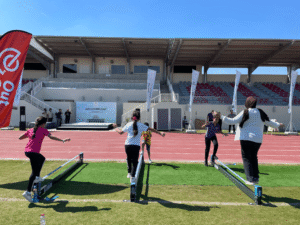
In schools we use progressive steps: assisted stands, short walks, and breathing cues. These exercises teach coordination and concentration in a safe way.
Practical: rotate stations so students try balance, agility, and gentle resistance work twice a week.
Corporate and wellness initiatives: quick breaks that matter
We recommend brief sessions during the workday to reduce stress and improve posture. Short Slackline breaks pair well with mobility and light resistance band drills for teams.
“Short, playful balance work breaks boost focus and group morale.”

Community and outdoor fitness: safe setups and local support
For parks we stress shade, ground checks, and secure anchors. Offer varied line heights and spotters so all bodies can join safely.
OutQore supports Dubai’s balance culture by supplying Balance & Movement equipment and running clinics that fit gym classes, school slots, and community hours.
| Venue type | Session format | Why it fits |
|---|---|---|
| Gym / Studio | Station circuit with slackline + resistance bands | Scales strength training and coordination without heavy loads |
| School | Weekly skill blocks (intro → practice → challenge) | Improves movement literacy and confidence |
| Corporate | 10–15 min mobility + slackline breaks, 2–3 times/week | Reduces stress, supports posture and team bonding |
| Community Park | Open practice hours + supervised workshops | Makes accessible, low impact workouts for families |
Programming tips: offer workshops, ongoing classes, and open practice. Progress skill work across the week and mix in resistance and core exercises so participants build power and control without joint strain.
Conclusion
Small, consistent habits on and off the line add up to real fitness gains. By favouring low-impact approaches, we can build strength, protect our joints, and keep the heart and muscle working together without excess wear.
Slacklining sharpens balance and core control so other exercises and workouts transfer better. Pair short line practice with squat, hinge, push, and pull patterns in a 20–30 minutes routine to improve movement quality and reduce injury risk.
Start simple: focus on clear starting position, steady minutes on the line, and pain-free ranges. In the UAE, community spaces and groups like OutQore make it easy to try these methods and grow durable capacity.